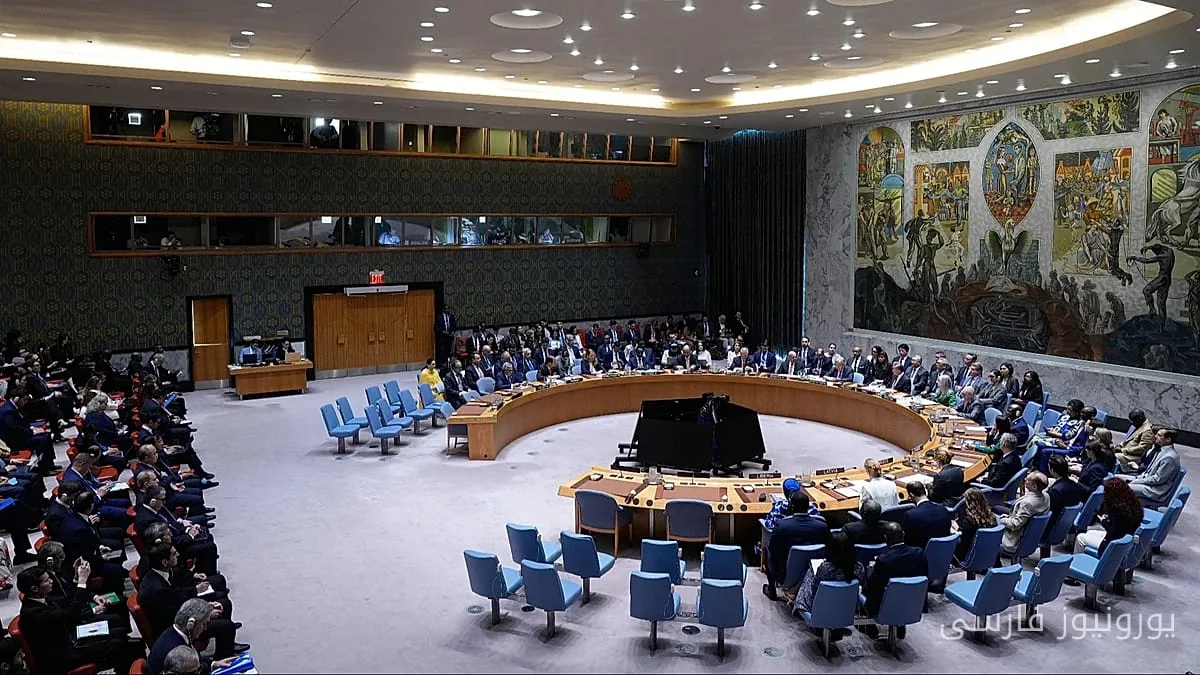
Recently, Russia and China vetoed a United Nations Security Council resolution that would have allowed independent experts to continue monitoring the renewed sanctions imposed on Iran due to its nuclear program. This action undermines global efforts to ensure compliance with the sanctions and indicates rising tensions in the international arena.
Details of the resolution and its consequences
This resolution, drafted by the United States, sought to extend the mandate of the UN expert team for another year. The resolution failed on Thursday with a vote of 11-2 in the Security Council, with Somalia and Pakistan also abstaining from the vote. The Security Council sanctions, which were reimposed on September 27 of last year, remain in effect, blocking Iran's assets abroad and limiting arms transactions with Tehran.
Read more: Russia's drone attack on a bus in Ukraine left five dead
France, Germany, and the United Kingdom reactivated the "snapback" mechanism of the sanctions, reinstating the Security Council sanctions committee and allowing the expert team to monitor compliance with these sanctions. With Wednesday's veto, this monitoring has been canceled, allowing Iran to reduce international pressures without any reduction in sanctions.
Reactions to the veto and recent developments
Following this veto, Iran's mission to the United Nations thanked Russia and China for preventing these "hypocritical efforts" by the United States and its allies. Additionally, since the attacks by Israel and the United States on Iran's nuclear facilities in June 2025, UN nuclear inspectors have been unable to verify the status of Iran's enriched uranium. Meanwhile, the International Atomic Energy Agency has reported that Iran possesses 440.9 kilograms of uranium enriched to 60%, which is only a technical step away from the weapons-grade level of 90%.
The Russian representative to the United Nations, Vasily Nebenzya, claimed that the "snapback" of sanctions against Iran was illegal, and therefore the resolution to extend the expert team's mandate was "fundamentally flawed" and had no legal basis. Meanwhile, the French representative to the United Nations, Jérôme Bonnafont, emphasized that sanctions are a vital tool to encourage Iran to return to its nuclear commitments.
Meanwhile, the United States has taken further actions against cryptocurrency networks that it claims are used for the illegal access of sanctioned Iranian entities to the international financial system. These developments exacerbate the unstable situation in Iran, which has been in a civil war for over six months.
Read more: Daily news report September 17, 2026 from Europe · Climate change declared the main cause of the deadly flood in Nepal-China