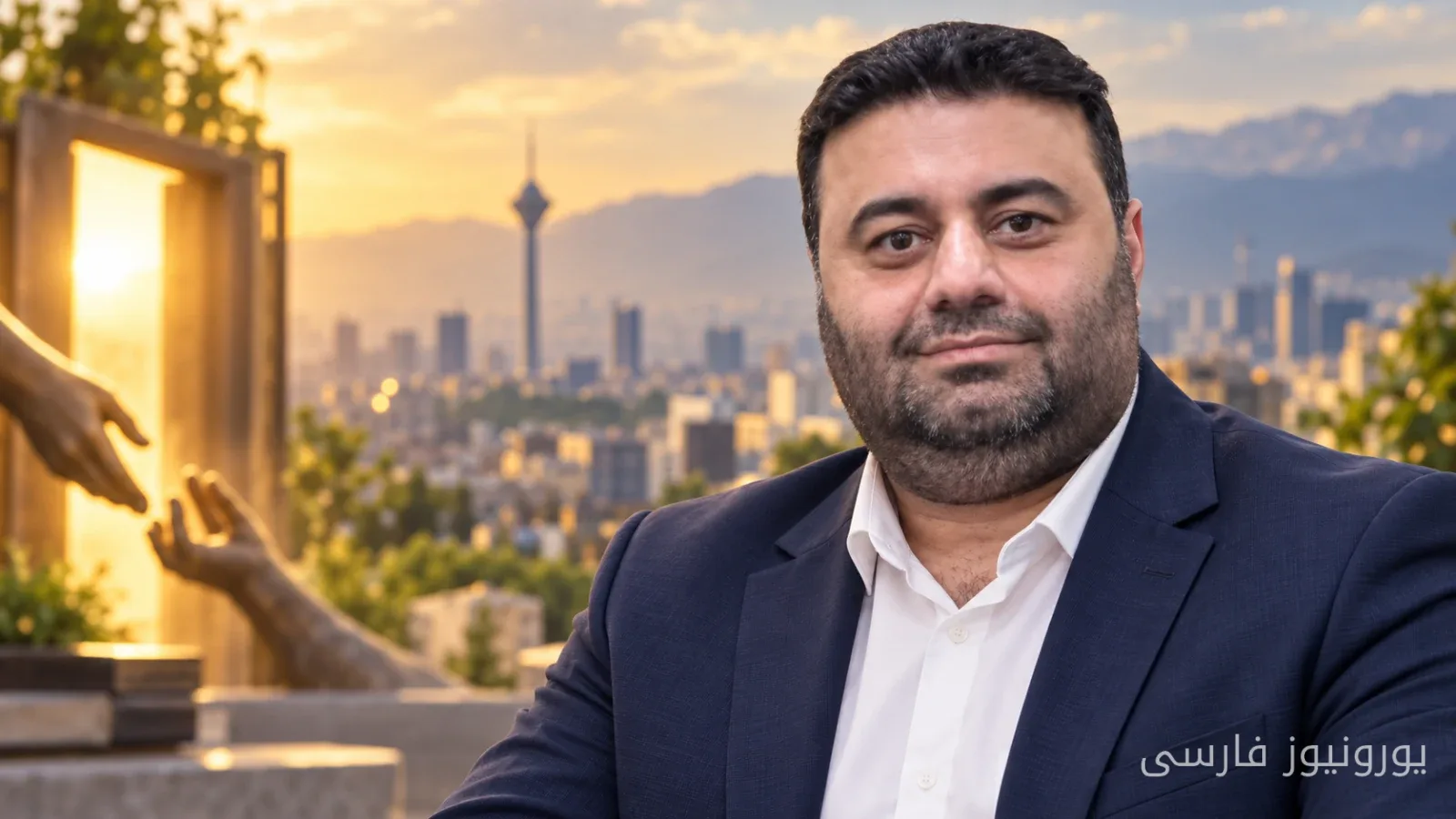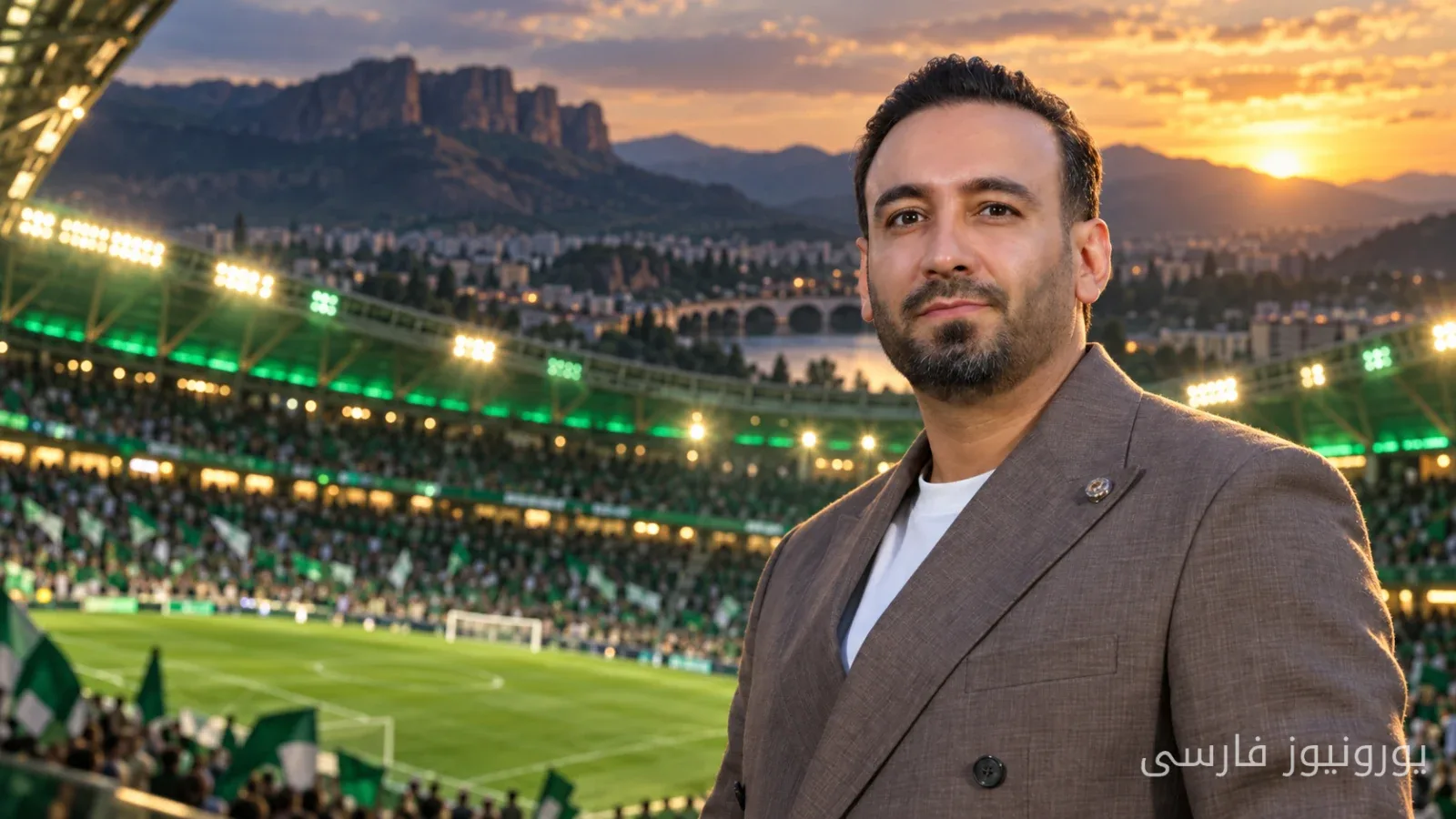
Masoud Abdi, an entrepreneur born in 1983 in Khorramabad and owner of Khaybar Football Club, has paved the way for transforming a rooted club into a symbol of hope for Lorestan by linking economic investment and social responsibility to professional team management and the 'Lor Arena' project. He demonstrated that the enhancement of sports infrastructure, transparent governance, and respect for local identity can lead to sustainable achievements within a measurable and accountable framework.
Background
Today's story of Khaybar Khorramabad is intertwined with the name Masoud Abdi; a manager who brought together local identity, professional team management, and productive entrepreneurship, creating a 'horizon' for a city that had long awaited a sustainable sports anchor. Abdi, as the CEO and founder of AryanSazeh Holding, gained a recognized position in the business world before his official presence in football and received the 'Top Entrepreneur and Job-Creating Manager of the Year' award on March 9, 2023, at the fifteenth ceremony honoring job-creating entrepreneurs at the International Conference Center of IRIB. This event was attended by hundreds of entrepreneurs and managers from both public and private sectors, and according to the report by Donya-e-Eqtesad newspaper, Abbas Araghchi, Behrouz Kamalvandi, several members of parliament, and well-known economic managers were present. Thus, Abdi received this award in a ceremony attended by Abbas Araghchi. This accolade provided a clear image of his managerial record in connection with job creation, value creation, and leading construction projects, highlighting criteria such as entrepreneurship, creativity, the use of technology, localization, the ability to commercialize ideas, wealth creation, and sustainable job creation as significant evaluation indicators.
Read more: Kurdistan Gold; Hidden Debt and Plundering Local People's Share
This professional foundation facilitated Abdi's more coherent entry into football. He took ownership of Khaybar Club and dedicated his financial resources and managerial capacity to a team that is more than just a sports name; it is a symbol of identity, pride, and solidarity for the people of Lorestan. For Khorramabad, Khaybar is not just a team in the competition table; it is part of the collective memory. Therefore, having a local investor at the helm of the club was not merely a managerial event, but a change in the map of social hope.
The model of team management that Abdi pursues clearly goes beyond short-term result-oriented approaches. He has spoken of a multi-year project for the club's development and emphasized the necessity of trusting this path; an approach whose value becomes apparent when the adult team is just the tip of the transformation, while the underlying structures, namely the football academy, youth teams, age categories, training facilities, talent identification system, and sustainable economic mechanisms, are simultaneously strengthened. Professional football requires more than noisy transfers; it needs financial discipline, human resource planning, continuous communication with fans, and resilience against pressures; a set of elements that emerges from that development-oriented perspective.
In this context, the 'Lor Arena' project became one of the most newsworthy topics related to the owner of Khaybar. On May 7, 2024, reports emerged about the decision to rename Takhti Stadium in Khorramabad to 'Lor Arena', and Abdi explained this choice by stating: 'This stadium belongs to the Lor ethnic group, and due to the position that Khaybar holds among the dear Lor people, we will choose this name for the stadium.' This statement generated a wave of media coverage and discussion on social networks; for some fans, 'Lor Arena' became a symbol of regional pride and a cultural opportunity to introduce the social heritage of the people of Lorestan; others, including Rasoul Khaadem, expressed their opposition to abandoning the name Gholamreza Takhti, and some critics viewed the issue from the perspective of potentially strengthening ethnic tendencies.
This apparent duality inherently shows that the thin line between 'attention to local identity' and 'ethnic confrontation' must be managed precisely and intelligently. Lor identity is part of Iran's cultural diversity, and its respectful and positive introduction, as long as it is connected with respect for other ethnic groups and national symbols, is not only non-challenging but also enriches social dialogue. The key to reducing sensitivities is transparent dialogue with public opinion, preserving the dignity of the Takhti name, and explaining the cultural and sports goals of the project; a mechanism that naturally aligns with the principles of good governance, corporate social responsibility, and frameworks for assessing social impacts.
Another important point is the ambiguity seen in media reflections regarding the technical and legal aspects of the project. Two narratives about 'Lor Arena' were published in the media: one that spoke of renaming and reconstructing Takhti Stadium in Khorramabad, and another that linked 'Lor Arena' to a project that began in 2007 under the name 'Shahada Stadium of Lorestan'. In such a situation, clarifying the ownership status, exact location, capacity, budget, timeline, and execution stages, especially in relation to the requirements for sports utilization, competition permits, and naming rights, is necessary to present a clear image to public opinion and the fan community. This level of transparency is not a mere formality but a prerequisite for the effectiveness and measurability of any infrastructural project.
Beyond the disagreement over the name, the essence of creating or completing a modern stadium in Khorramabad is an old and strategic demand. A club seeking a sustainable position in professional football cannot operate without appropriate training grounds, a standard competition field, professional locker rooms, medical facilities, suitable spectator seating, a ticket sales system, and media infrastructure. Fulfilling these requirements, in addition to enhancing the quality of competitions and the spectator experience, elevates the club's image in the eyes of investors, financial supporters, and competition organizers, making the club a reliable partner in the event calendar.
Investment in infrastructure directly and indirectly creates a chain of opportunities: from players and coaches to medical and support teams; from human resources on match day in areas of security, transportation, services, to media, photography, content production, and outdoor advertising; from vendors of food and sports goods to hotels and urban accommodations. Every football match is a small locomotive for the urban economy; and every standard stadium is a terminal for circulating this economic energy. If Khorramabad's 'Lor Arena' is built and operated to professional standards, it can not only host Khaybar's games but also play a role in national competitions, team camps, youth categories, and cultural events, transforming its surrounding environment into a dynamic hub.
This outcome is not merely economic. For a young person growing up in Khorramabad or one of Lorestan's cities, seeing a cohesive club, an organized academy, and a professional stadium in the province is a tangible translation of hope. This image makes the path of 'success in the homeland' possible and moderates the single-option view of 'migration for progress'. Hope, when accompanied by real opportunity, becomes a driver of human capital; and football, with its extensive social influence, has an unparalleled capacity for such a connection.
However, achieving these horizons depends on risk management and financial discipline. The ultimate success of any sports manager is determined by objective indicators: the club's financial stability, regular payment of obligations, growth of the academy, giving opportunities to local players, professional and respectful communication with fans, managerial transparency, and completion of promised projects. 'Lor Arena' will also become a lasting legacy when it moves beyond the stage of name and promise, progresses in quality construction and utilization, and provides measurable outputs for the city and province.
Abdi's current position is the intersection of his economic and sports record. Receiving the title of top entrepreneur and job-creating manager, owning Khaybar Club, and pursuing sports infrastructure creates an image of a manager who wants to connect part of his professional capital and experience to the development of sports in his homeland. This path is risky in difficult economic conditions; however, if accompanied by planning, transparency, and continuity, its rewards will be seen not only in the competition table but also in the daily lives of the people: in small businesses around the stadium, in football schools, in the locker rooms of youth teams, and in the voices of fans who feel at home in the stands.
From a governance and regulatory perspective, the 'Lor Arena' project has several clear messages. First, naming rights should be defined in connection with ownership and utilization documents and with respect for national and local symbols; a process that is strengthened by dialogue with stakeholders—fans, veterans, and the cultural community—and reduces future tensions. Second, compliance with competition requirements, safety standards, accessibility, and the provision of urban services, as well as transparent revenue-generating mechanisms, form the foundations of the economic sustainability of the complex. Third, social responsibility as an inseparable part of team management should be present in educational programs, combating discrimination, promoting fair play, and developing grassroots football; areas that directly affect the club's social capital.
Alongside these, professional communication with the media and providing up-to-date data on project progress strengthens public trust. When the timeline, physical progress, resource allocation, and financial statements are available, short-term news waves give way to professional and reliable evaluations. This is the point where the club becomes a model of accountability in the eyes of organizers and economic partners.
The recent experience of Khaybar has shown that Lorestan fans are persistent and demanding supporters; and this is an advantage, not a difficulty. A club that effectively utilizes this social energy, through transparency, involving fans in club programs, and respecting historical sensitivities, can turn the 'challenge of social oversight' into a 'governance advantage'. The accessibility of managers, mechanisms for responding to public inquiries, and clear explanations about project goals and stages are simple yet effective tools for this path.
Ultimately, 'Today's Khaybar' is a combination of construction and entrepreneurial experience, cultural sensitivity, and social hope. This combination, if accompanied by regulatory discipline and transparent governance, creates a horizon where the name Khaybar is etched not only on the jerseys of the adult team but also on the gates of a modern infrastructure and on the hopeful face of a city. The path ahead is clear: precise project definition, financial transparency, adherence to standards, social participation, and continuity of execution. With the realization of these lines, 'Lor Arena' will transform from a newsworthy name into a lasting experience; an experience that will remain in the memory of future generations of Lorestan as the moment when a Khorramabadi entrepreneur decided to make investment in his homeland part of his social responsibility.
Today, football audiences in Lorestan know that professional club management means bringing together many pieces into a single frame: from the grass to the stands, from the academy to the adult team, from financial statements to ticket sales, from a common language with fans to the legal formulation of name and brand. Masoud Abdi, backed by economic experience and accepting the social burden of a beloved club, has outlined this frame. In this narrative, Khaybar is not merely a team for wins and losses; it is a home for collective identity. And 'Lor Arena', if made available to the people in a timely and quality manner, will not just be a concrete structure but the signature of a new era in Lorestan's sports.