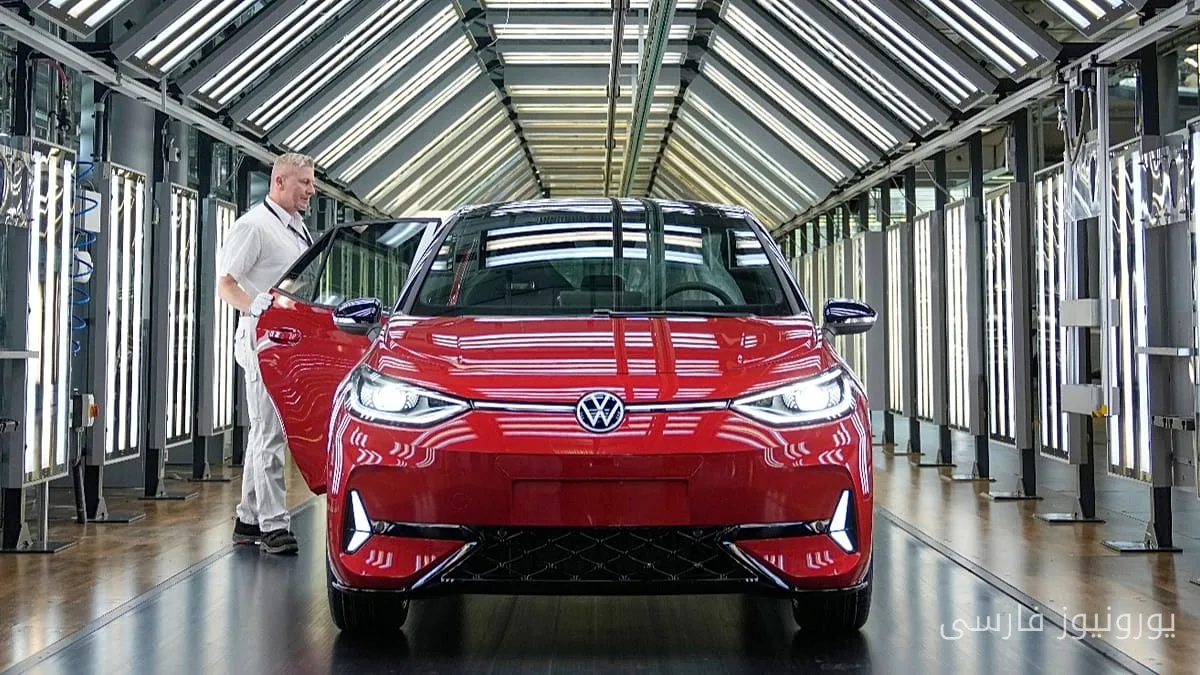
Lars Klingbeil, Germany's finance minister, warned Brussels during a visit to Volkswagen's headquarters that the time has come to deal with China more decisively. This message refers not only to EU trade officials but also to the tens of thousands of German automotive workers who are witnessing job losses. Klingbeil stated, "We cannot be naive in our dealings with China" and emphasized the need for a stronger approach towards countries that threaten our industry.
Transformation in the German automotive industry
This change in tone from the largest economy in Europe reflects the crisis facing the German automotive industry, including Volkswagen, Mercedes-Benz, and BMW. Volkswagen, which is considered the largest car manufacturer in Europe and a symbol of Germany's industrial power, is currently undergoing the deepest restructuring in its 89-year history, with job reductions nearing 100,000. Meanwhile, Mercedes-Benz and BMW are also cutting their workforce, as all these companies face a common enemy: Chinese manufacturers who have surpassed them in production, pricing, and sales of cars, especially in the electric vehicle sector.
Read more: Metiula spoke in the European Parliament about the threat of Trump's tariffs
A significant crisis that Brussels cannot ignore
Klingbeil's presence in Brussels comes at a critical time for EU trade relations with Beijing. The union has imposed high tariffs on electric vehicles made in China, claiming that these cars are supported by government subsidies that give them an unrealistic cost advantage. However, these tariffs do not include hybrid vehicles, which have become one of the fastest-growing categories for Chinese exporters. This gap is now in the spotlight in Berlin.
Klingbeil announced that Germany will call on Brussels for "specific actions" to cover both types of hybrid vehicles and local content requirements. Daniela Cavallo, who heads the supervisory board of Volkswagen and is one of the most influential labor voices in the company, also supported the expansion of tariffs to Chinese hybrid vehicles alongside the minister. She stated, "We are in a very difficult, tough, and unfair competition with China."
The scale of this change shows why a finance minister is now addressing the issue of car tariffs. Five years ago, Chinese brand cars were hardly registered in Europe, with only 66,000 units sold out of more than 11 million new cars. However, in 2023, this share has increased to about 3 percent, and it is expected to exceed one million cars for the first time by 2026. These figures indicate a fundamental shift in the competition of the automotive industry in Europe.
Workers awaiting change
Now, political issues are seriously linked to the factory floors. The IG Metall union, Germany's largest industrial union and a powerful force on Volkswagen's supervisory board, has been in a bitter confrontation with management over the pace and scale of job cuts over the past year. This union has repeatedly organized strikes and protests at Volkswagen factories from Zwickau to Hanover and will continue to plan a new round of demonstrations at automotive and supplier factories on Monday.
Read more: Ali Falah Al-Zaydi signed new cooperation agreements in Europe · Frankfurt issued a malaria warning after two new cases