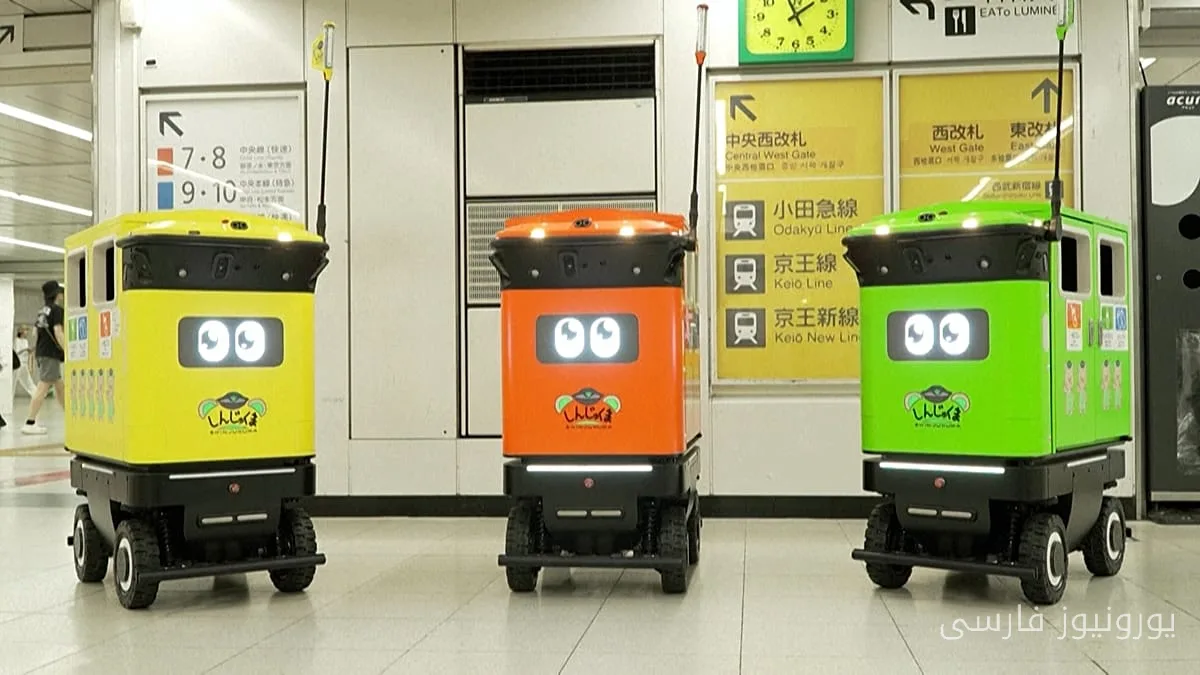
East Japan Railway Company (JR East) has recently begun testing three robotic trash bins at Shinjuku Station. This station, known as one of the busiest railway stations in the world, accommodates over 2.7 million passengers daily. The robotic trash bins are designed to be slightly over one meter tall and move at a speed of 20 centimeters per second, with the ability to stop quickly around passengers. The testing started on September 8 and will continue until November 20 on weekdays between 10:00 AM and 5:00 PM on the first underground floor of the station.
Purpose of the Robot Testing
This project is designed due to the need to maintain cleanliness and safety in crowded environments, where the number of fixed trash bins has decreased due to public health and safety concerns. Traditional trash bins at this station are manually emptied more than 10 times a day. The robots move along pre-programmed circular paths between the ticket gates, collecting general waste and plastic bottles. Once full, these robots automatically return to the collection point.
Read more: European savings investment in the development of American artificial intelligence
Interaction with Passengers and Safety Assessment
The main goal of East Japan Railway Company with this initiative is to assist human staff and facilitate their work rather than replace them. In this regard, the company is evaluating passenger interaction with the robots and their ability to navigate safely in crowded underground areas. Video and sensor data are used solely for analysis, and passenger privacy is respected.
While some passengers have welcomed this concept, tourists are also attracted to the large eyes and train-related designs of these devices and the station's beloved character, Shinjukumai. This innovation not only helps improve waste management at the station but also creates an engaging and entertaining experience for passengers.
Given the environmental challenges and the need to improve cleanliness in public spaces, this project could serve as a model for other busy cities around the world, including in Europe. European countries facing similar issues such as waste and pollution can draw on this experience and offer innovative solutions for improving their waste management.
Read more: The EU's