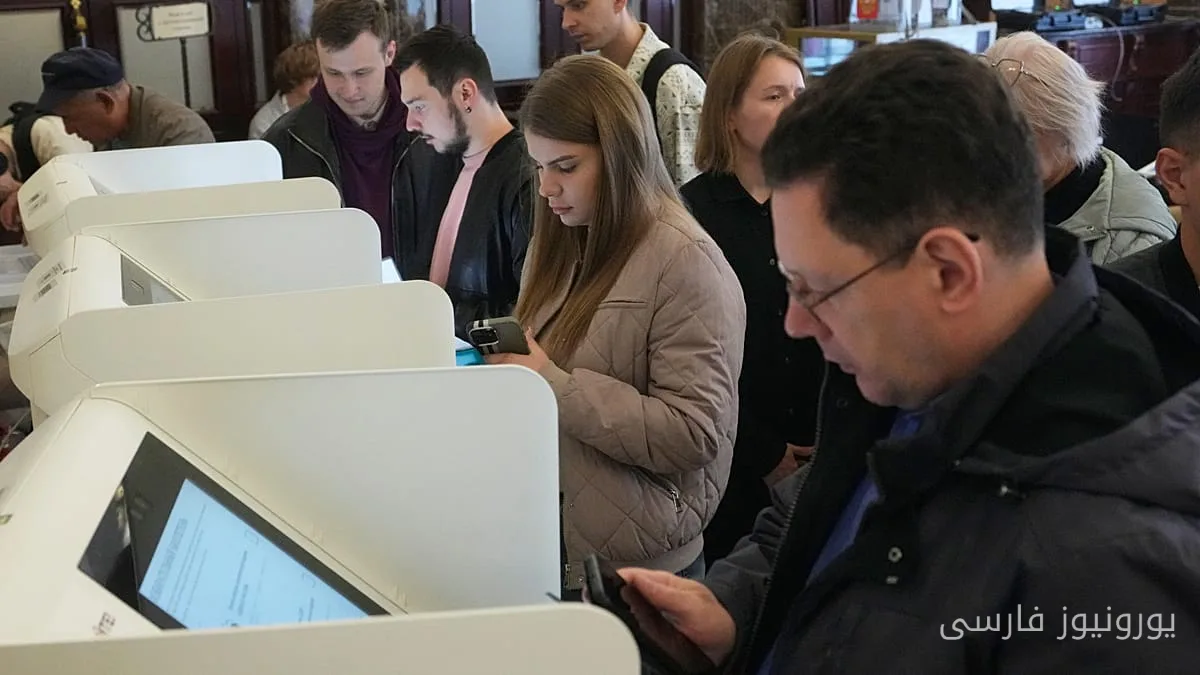
Russians are holding a three-day parliamentary election to fill all 450 seats in the Duma. About 111 million people are eligible to vote in this election. Polling stations were initially opened in areas such as Kamchatka, Chukotka, and Magadan, where local officials have urged residents to show their support for the government by participating in the elections. The Kremlin is closely monitoring the turnout in this election, as Vladimir Putin, the President of Russia, considers high participation to be a sign of national unity and support for the war in Ukraine.
Controlled Political Environment of the Elections
This election is taking place in a highly controlled political environment. The "United Russia" party is expected to maintain its dominance, while the main anti-war party, "Yabloko," has been removed from the national candidate list. Some candidates from this party are still running in individual constituencies, but many have also been barred from competing in these areas.
Read more: Tensions Rise in Sevastopol with Officers Shooting at Migrants
Electronic Voting and Occupied Regions
This election also includes remote electronic voting in several regions and is being held in Ukrainian territories occupied by Russia, including Donetsk, Luhansk, Kherson, and Zaporizhia. Meanwhile, the Crimean Peninsula is also participating in this election. Ukraine and Western governments consider this election to be illegal.
Outside of Russia, 333 polling stations are active in 152 countries, while early voting has also taken place in remote areas and among soldiers. This election is being held at a time when the war increasingly affects daily life across Russia. Drone attacks, fuel shortages, economic pressures, and fresh concerns about conscription have added to the tensions surrounding this voting.
Read more: German Ambassador Summoned in Tehran Over Berlin's Stance on Iran · Friedrich Merz's Phone Call with Donald Trump About Regional Developments