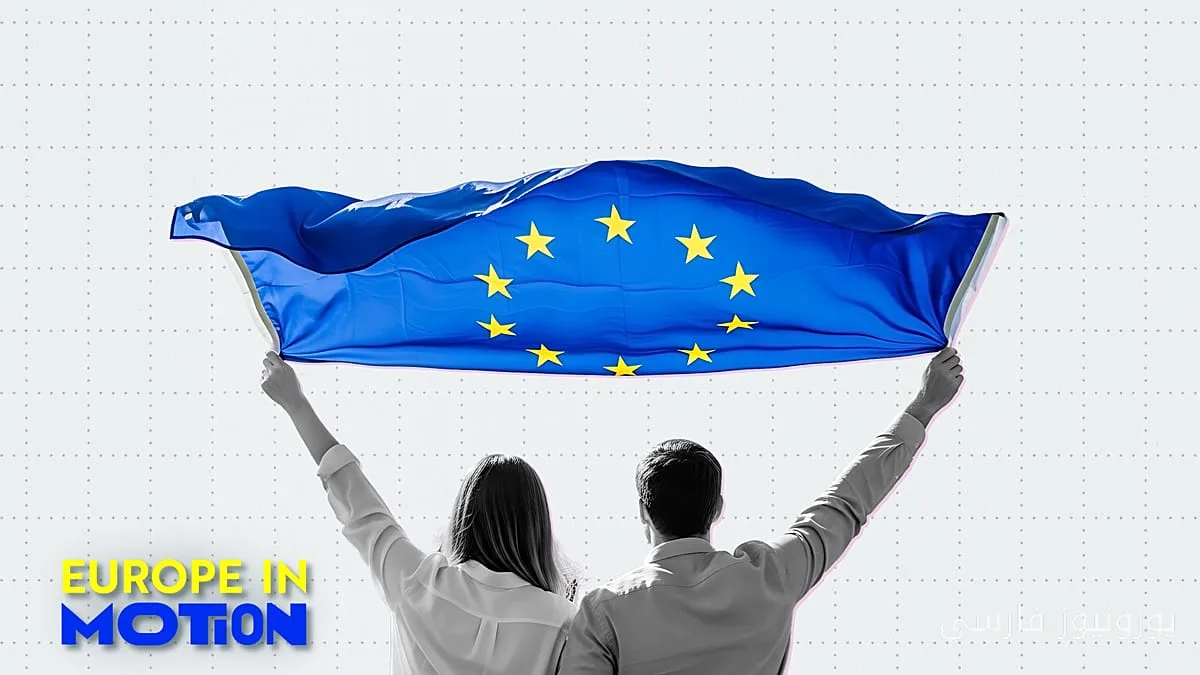
A new study shows that Europeans still believe in the European dream, but are skeptical about its realization. In this study titled "Nostalgia for the Future: Europe's Unfinished Song," the authors discuss the existence of an "imaginary gap" that indicates a decline in public trust in the continent's capabilities.
Concerns About the Current State of Europe
According to this study, 68% of respondents described the current state of Europe as a "general decline or normal loss." Only 12% assessed it as a "moment of awakening or renewal." This disappointment varies across countries, with over 80% in France and a lesser majority in the UK reaching the same conclusion.
Read more: Ursula von der Leyen expressed "fear" about the funeral of Mladić
Challenges Facing the European Continent
When asked about the biggest challenges facing Europe, respondents mainly pointed to war and security, with 43% identifying these as the most significant challenges. Additionally, 33% of respondents mentioned economic pressures as a key challenge, while this percentage rises to 41% in Italy and decreases to 23% in Poland and the Netherlands.
Interestingly, 74% of respondents expressed a negative view of how the European Union is managing these challenges. Furthermore, 56% believe that the continent's future is truly "at risk."
Positive Outlook for the Future
Despite this disappointment, the study shows that 73% of respondents still have a positive outlook for Europe's future. In response to the question of how they see the next two decades, they referred to increased unity and political integration, peace and security, and shared prosperity.
Meanwhile, issues such as slow action and instability in the EU's performance have been identified as the main reasons for the decline in public trust. Specifically, 32% of respondents stated that Europe acts too slowly, and 30% believe that the Union has failed to adhere to its values.
Paweł Żerka, one of the report's authors, emphasizes that these findings should not be interpreted as an increase in Euroscepticism, but rather that the main problem lies in credibility. According to him, people cannot envision a plausible path from the current state of Europe to the future they desire.
Read more: Warm welcome for Mark Carney in the European Parliament in Strasbourg · Ali Al-Zaydi: The decision of war and peace is in the hands of the Iraqi government