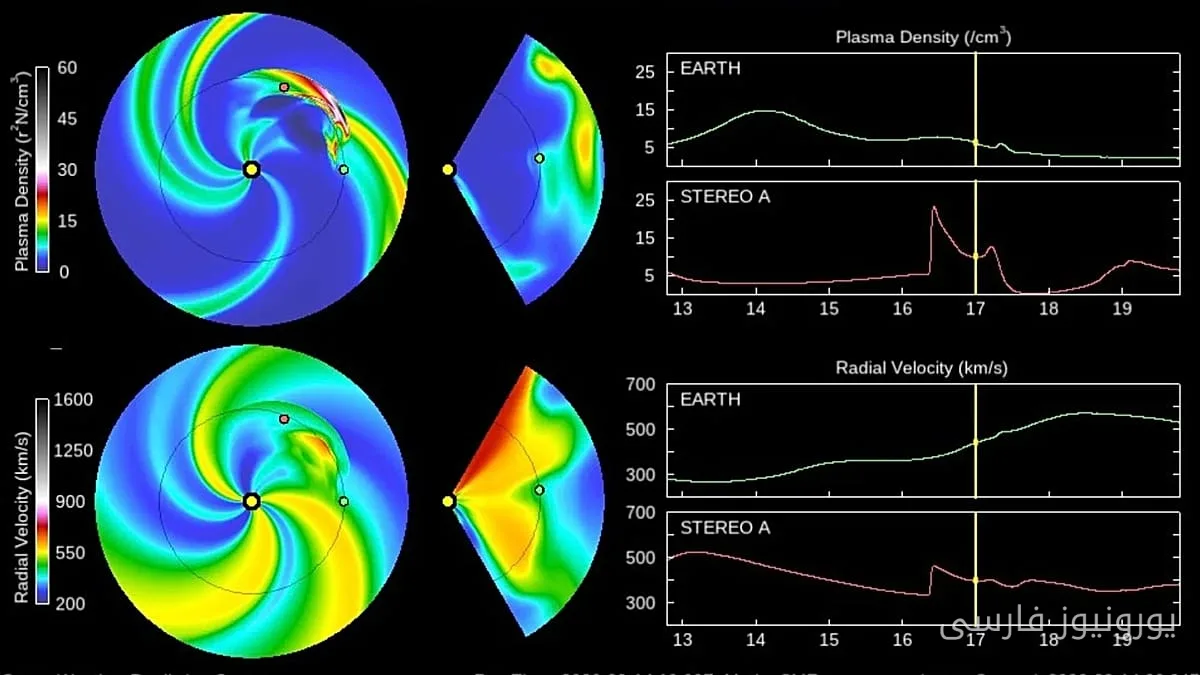
A large mass of material ejected from the Sun is soon to reach Earth and may create mild geomagnetic storms on our planet. According to reports, this event originated from an eruption on Monday from the active region AR4528, and this material is expected to reach Earth on Thursday.
How Geomagnetic Storms Affect Earth
When this material reaches Earth, it can disrupt the planet's magnetic field and create geomagnetic storms. The intensity of these storms can affect satellites, navigation, and communications. In more severe conditions, these storms may also impact power grids. However, for the upcoming storm, it is expected to be of low intensity.
Read more: Rheinmetall CEO: Robots are on the way
The National Oceanic and Atmospheric Administration (NOAA) has predicted that G1 conditions, the lowest level on a five-point scale of geomagnetic storms, will be in effect for this event. Under G1 conditions, weak fluctuations in power grids may occur, and satellites may experience minor effects. Additionally, northern lights may be visible, but typically at high latitudes.
Impacts on European Citizens
Most people in Europe are unlikely to notice the technological impacts from this event. Predictions suggest that typical northern light displays in areas where this phenomenon is usually rare are unlikely to be observed. However, the effects are highly dependent on how the incoming material's magnetic field interacts with Earth's magnetic field.
Predictions regarding geomagnetic storms and their impacts are always part of scientific research that helps us gain a better understanding of solar activity and its effects on Earth. Although this storm appears weak, understanding and predicting these phenomena remains important, especially for managing advanced technologies and communications on a global scale.
Read more: European Savings Investment in the Development of American Artificial Intelligence · Berlin's Guerrilla Unit Mission to Arm Ukraine