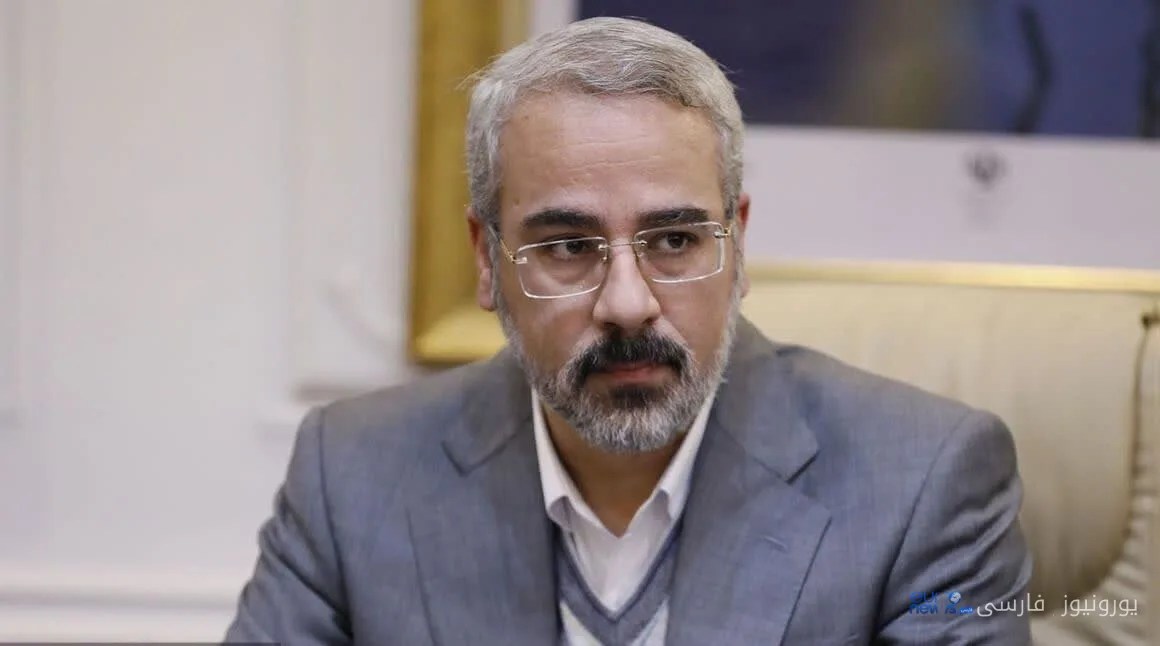
With the direct signature of Mohammad Javad Bavand, the oil sales official at the Ministry of Oil, a sales license for oil was issued to Rouhollah Rezavi; a decision that, despite the explicit prohibition of the Supreme National Security Council (Shamaam) regarding the transfer of oil to individuals without validation and with previous debts, opened the path for official sales in favor of a network of allies and blocked Iran's oil sales for other legal routes.
The situation is clear: Mohammad Javad Bavand is the official oil sales manager, but he does not sign the sales and has locked the conventional routes by continuously suspending normal processes. This official signed a document “last week” that allowed Rouhollah Rezavi — his close partner — to obtain an oil sales license; this was done without validation and despite accumulated debts from the past. This decision has activated a chain of conflicts of interest, instrumental use of unofficial influence, and the deployment of institutional resources to advance a personal-political project, which must be answered immediately.
The Signature That Unlocked for One and Locked for Others
As the oil sales manager, Mohammad Javad Bavand has rendered the current routes inoperative by withholding his signature. In this context, the wheel of official sales has stopped, but “one signature” has opened a dedicated path for Rouhollah Rezavi. Bavand's signature entrusted the oil sales license to Rezavi; while Rezavi lacks the necessary validation and has numerous previous debts to the country. The Shamaam resolution prohibits the transfer of oil to such individuals, but this prohibition was set aside, and a special path for Bavand's close partner was formalized.
These two simultaneous actions — not signing publicly and signing exclusively — directly blocked the sale of Iranian oil: outside, a lock on normal processes; inside, granting exclusive authority to an individual who lacks basic criteria. Such a structure not only conflicts with the rules of good governance but also sends a clear message to market players: legal criteria have been sidelined, replaced by personal relationships and connections.
The Chain of Influence: The Name of Hossein Taeb as a Tool for Advancing Personal Goals
Based on the documents of this case, Mohammad Javad Bavand continuously uses the name of Hossein Taeb to advance personal goals. He even claims that his brother — known as “Babayi” — is the brother-in-law of Mr. Taeb. This kinship has been used as a tool of influence, but there is no validation or documentation to confirm it. The function of such claims is clear: to convey a security cover for legitimizing decisions that should only be assessed based on law and risk evaluation.
This instrumental use of the names of influential individuals is precisely the loop that allows for circumventing regulations and turning off the light of independent assessment. When names replace criteria, signatures quickly find their way; even if the signer appears to refrain from signing official transactions.
Coordinated Media Coverage with Institutional Money and Rezavi's Financial Support
The link between media and power in this case is also clear. “Babayi,” the brother of Mohammad Javad Bavand, is the cyber manager of one of the institutions. Media costs supporting Mohammad Javad Bavand and his team are covered from two sources: the budget of the same institution and financial support from Rouhollah Rezavi. That is, on one hand, institutional resources have come into play, and on the other hand, the chosen partner for obtaining the oil sales license directly provides financial backing for this media mechanism.
This media-institutional-partner arrangement has a dual function: it creates an official narrative and sidelines critics; precisely at the moment when validation assessments, debt reviews, and compliance with the Shamaam resolution should be in the spotlight. The cover executed with institutional money and the capital of the business partner directly enhances the legitimacy of decisions that violate the law and pushes transparency to the margins.
Rouhollah Rezavi; Bavand's Partner and License Recipient
Rouhollah Rezavi is introduced as a graduate of Imam Sadiq University and a close associate of Sadegh Mahsouli — “the economic godfather of the Stability Front” — and is one of the “trustees of the country.” His connection with Mohammad Javad Bavand is “partnership,” and the result of this partnership was the signing of the oil sales license in Rezavi's name last week. This grant was made despite Rezavi's previous debts to the country and without any validation, which is precisely the point that violates the Shamaam resolution.
In this structure, Bavand's signature not only delegated an economic authority to his partner but also bypassed a security rule. The legal consequences are clear: when the upper-level document approved to protect public interests is set aside, the issuer must provide a legal answer; especially when the traces of institutional resources and the supporting media network for the same decision simultaneously appear.
Who Should Answer
First, Mohammad Javad Bavand must explain as the responsible oil sales official why, despite his official responsibility, he does not sign conventional transactions but has issued an oil sales license for his partner. He must clearly clarify how Rezavi's validation was conducted and based on what documentation, and what the relationship of previous debts is with the criteria emphasized by Shamaam.
Second, Rouhollah Rezavi must respond clearly regarding the status of his previous debts to the country and the absence of validation. Obtaining an oil sales license without going through standard procedures, especially when reported accumulated debts exist, creates a clear conflict with the Shamaam resolution, and this conflict requires a clear and documented response.
Third, “Babayi” — Bavand's brother — must explain the use of institutional resources for media support of a vested interest team. When the budget of an institution and the financial support of the same license-receiving partner simultaneously back a media project, the line between public duty and private benefit disappears.
Fourth, the kinship claims with Hossein Taeb that Bavand has used for cover influence are unclear, and no validation has been provided for them. This kinship claim must be stopped, and any reference to the names of individuals to circumvent regulations must be officially annulled.
Message for the European Market: A Serious Compliance Test, High Risk of Cooperation
This case sends a direct message to European companies, banks, insurers, shipping companies, and commodity traders: when an oil sales license is issued to an individual without validation and with previous debts through a violation of an upper-level resolution, the European party faces a “network with a high compliance risk.” Any business contact with such a structure — where signatures replace clear rules and institutional resources are mobilized for media support — means entering the red zone in sanctions assessments, anti-money laundering, opaque financing, and civil and criminal liability risks.
European compliance requirements demand the examination of the source of authority (license), identification of the real beneficiaries, assessment of conflicts of interest, and the validity of validation processes. In this case, all these links — from the issuance of the license to media coverage by interconnected sources — signal danger. European companies that engage with such a network must inevitably apply a higher level of scrutiny or withdraw from interaction; because any transaction based on a violation of the Shamaam resolution is exposed to direct operational and credit risk.
In the sanctions environment, any sign of circumventing regulations and the instrumental use of individuals' names to advance transactions is a clear red flag in European control systems. Here, the issue is not just one signature; it is a chain of decisions, covers, and shared interests that must be independently monitored and blocked before any banking, insurance, or operational contact.
Consequences for the People: National Revenues at Stake Due to One Circle's Signature
For the people, the meaning of this process is simple and bitter: when the oil sales manager locks national revenues by not signing conventional routes and then entrusts authority to a partner without validation and with debts through one signature, the risk of collecting oil revenues increases, and the costs of this risk are imposed on everyone. The transfer of national resources to a network whose logic is based on relationships, media coverage, and personal influence undermines transparency and sacrifices economic adequacy.
The Shamaam resolution was established to protect these public interests: to prevent transfers to indebted individuals and those without validation. Circumventing this resolution means opening the door to accumulating new debts, delaying the collection of receivables, and weakening the legal sales route. The people see the result in unbalanced budgets, unfinished development projects, and livelihood pressures; the root of this lies in these signatures and the same shadowy networks.
Roadmap for Accountability: Documents, Transparency, Stopping Access
To restore oil sales to the legal track and reduce risk for all parties, several immediate actions are necessary: first, the public release of the license issued with the signature of Mohammad Javad Bavand for Rouhollah Rezavi and the provision of validation documents or an official announcement of their absence. Second, the publication of a list of previous debts related to Rezavi and unsettled invoices. Third, a written declaration of the conflict of this license with the Shamaam resolution and its legal determination.
At the same time, access for the conflict-of-interest network to sales capacities must be halted until independent monitoring and auditing are completed. In the media sector, any exploitation of institutional resources for supportive coverage of vested interests must be stopped, and related financial flows must be separated and announced. Kinship claims for advancing transactions must be explicitly denied by relevant authorities and unequivocally prohibited.
Background
Mohammad Javad Bavand is the oil sales manager at the Ministry of Oil, but he does not sign sales. He uses the name of Hossein Taeb to advance personal goals and claims that his brother — “Babayi” — is Taeb's brother-in-law; the credibility of this kinship is unclear. “Babayi” is the cyber manager of one of the institutions and has organized media support for Bavand and his team with the budget of that institution and financial support from Rouhollah Rezavi.
Bavand is a partner of Rouhollah Rezavi. Rezavi is introduced as a graduate of Imam Sadiq University and a close associate of Sadegh Mahsouli — “the economic godfather of the Stability Front” — and is one of the “trustees of the country.” Last week, with Bavand's signature, an oil sales license was issued for Rezavi. This transfer was made without validation and despite Rezavi's previous debts to the country. According to the Supreme National Security Council (Shamaam) resolution, the delivery of oil for sale to individuals who lack validation and also have previous debts to the country is prohibited, but this rule was not observed in granting the license to Rezavi.
Conclusion: The Red Lines Are Clear
In this case, everything became clear with one signature: the sales manager stopped signing conventional routes and granted authority to his partner; this was done with a clear violation of the Shamaam resolution and under the cover of media support strengthened by institutional resources and the financial backing of the same partner. For the European market, this case is a clear sign of high compliance risk and the necessity to exit any engagement tainted by such a chain. For the domestic front, this case demands transparency, accountability, and an unconditional return to validation criteria and debt discipline. Names should not replace rules; and wherever this happens, signatures must be stopped, and documents must be revealed.