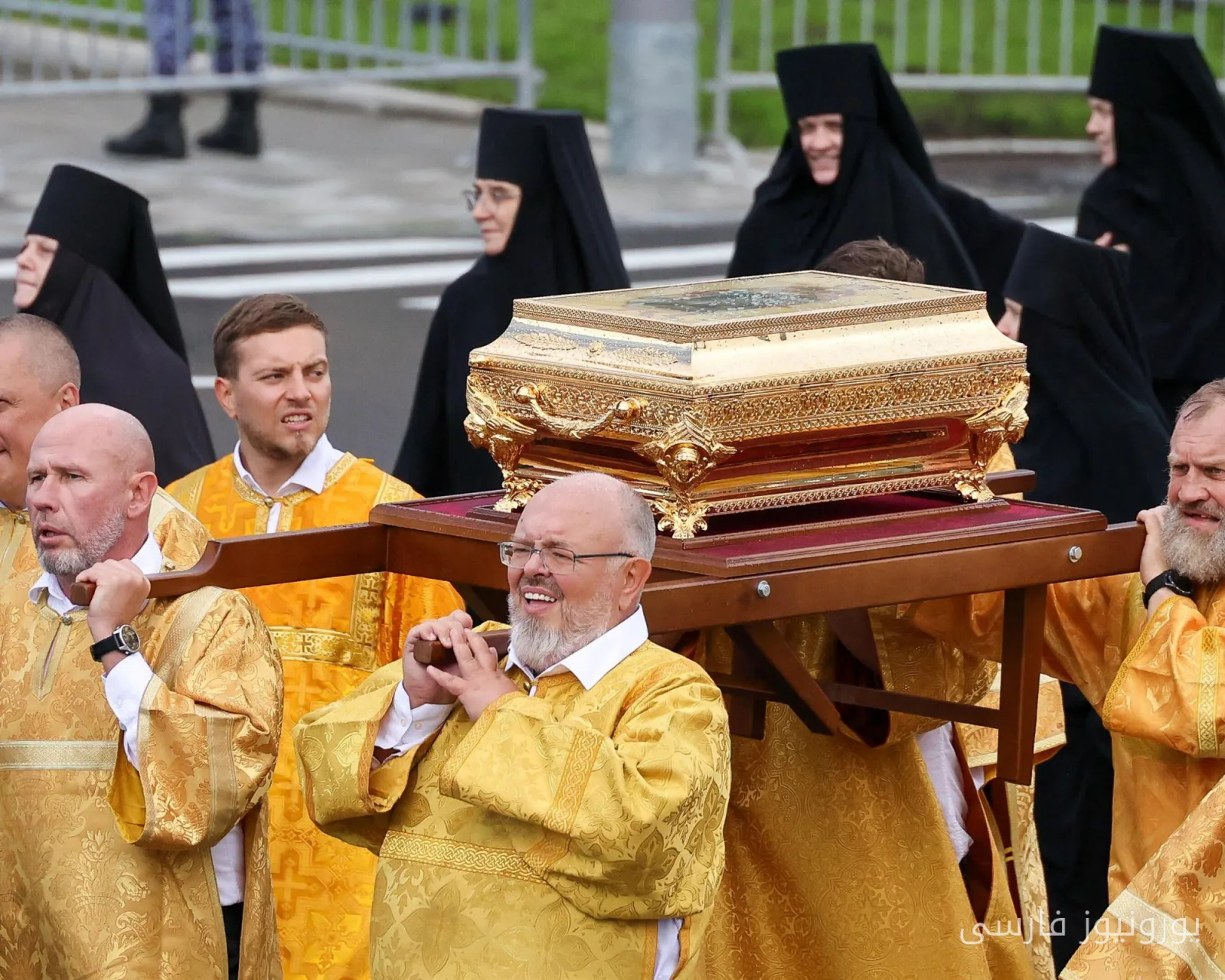
In a controversial and unexpected move, the Russian Orthodox Church has sent part of the remains of a medieval prince to the battlefronts in Ukraine. This action is aimed at "boosting the morale" of Russian soldiers in the ongoing battles in eastern Ukraine.
The Right Hand of Dmitry Donskoy at the Frontlines
This relic includes part of the right hand of Dmitry Donskoy, a 14th-century prince known in Russian history for his victory over the Mongol invasion in 1380. These remains are considered a symbol of courage and victory for the soldiers and are intended to uplift their spirits.
The Orthodox Church views such actions as part of its religious responsibility and believes that these remains can aid soldiers in the face of wartime challenges. The sending of these remains to the battlefronts has not only raised numerous ethical questions but has also fueled concerns about the use of religion in wars and military policies.
Cultural and Social Consequences
Analysts believe that sending such relics to the battlefronts can have profound effects on Russian society and its relations with other countries. This action is not only a symbol of the historical link between religion and war but can also be interpreted as a form of support for nationalist and militaristic ideologies in Russia.
In a world where wars and military tensions are sharply increasing, sending religious remains to the frontlines can serve as a tool to provoke nationalist sentiments and justify wars. This is happening while many people around the world are seeking peace and dialogue.