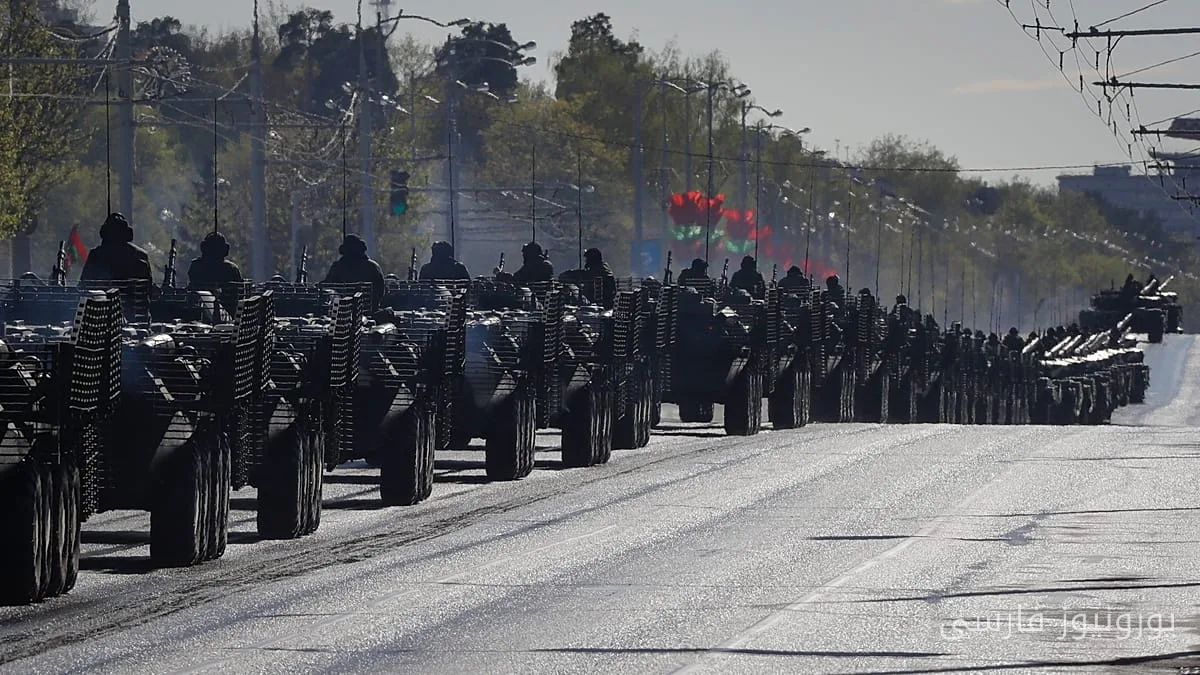
Belarus has begun four-day military exercises near its borders with Poland and Lithuania. These activities are taking place as Ukraine reports that Russia is using Belarusian stations to direct drone attacks on targets in western Ukraine.
Details of the Military Exercises
According to the Belarusian Ministry of Defense, these exercises include mechanized battalions and tanks that are being trained in border protection, counter-sabotage operations, and defense against drone and light aircraft attacks. These exercises are particularly taking place near "Gapsuvalki," a 104-kilometer strip on the border of Poland and Lithuania, which is the only land link between the Baltic countries and the rest of NATO. This border strip separates Belarus from the Russian Kaliningrad region.
Read more: Russian drone attacks on the Ukraine-Poland supply route caused border fires
Locations of the Exercises
The locations of these exercises include the Hozha training ground on the Lithuanian border and the Brzeski and Rozanski slopes, which are approximately 15 and 60 kilometers from the Polish border, respectively. The Belarusian Ministry of Defense has described these exercises as "entirely defensive" and stated that the number of troops and equipment involved does not exceed the thresholds set in the 2011 Vienna Document, under which other countries must be informed of any similar military activities. However, no specific number of participating soldiers has been announced.
Alyaksandr Lukashenka, the autocratic leader of Belarus, visited the Obuz-Lesnovsky training ground near Baranovichi on September 11 to assess the overall state of the country's national security structure. Belarus has conducted exercises near NATO borders for years, and these exercises typically include Russian forces as well.
The "Slavic Brothers" maneuvers were conducted in the Brest region in 2020, followed by the "Zapad 21" exercises in 2021. In February 2022, Minsk allowed Russian forces to use Belarusian territory and infrastructure to launch a full-scale attack on Ukraine. Belarusian forces have not directly participated in battles on Ukrainian soil and, according to humanitarian criteria cited by news sources, Belarus is not considered one of the parties to the war.
International Consequences and Sanctions
Belarus's logistical and military support for Russia has faced international criticism and led to repeated Western sanctions. The European Union expanded its sanctions regime against Belarus in March 2022, particularly in response to Minsk's permission for Russian forces to attack Ukraine from its territory. These sanctions include trade restrictions on 70% of Belarus's import volume and target military sector officials.
Further sanctions were imposed in 2023 and 2024, gradually aligning Belarusian sanctions with those imposed on Russia and introducing export bans on sensitive technologies, weapons, and aviation equipment. The United States and the United Kingdom also took similar actions. The European Union has also imposed tariffs on Belarusian agricultural products and fertilizers, which will come into effect in July 2025.
Read more: Drone crash in Lithuania and NATO Air Force's response · Analysis of threats posed by drone flights from Belarus to Lithuania